How Much Protein Do You Actually Need? A Practical Everyday Guide
Protein has become a wellness buzzword, but the basic question, how much do you actually need, gets surprisingly little attention. The answer matters for far more than muscle building: protein supports immune function, hormone production and tissue repair, and, day to day, how satisfied you feel after a meal.
A simple daily benchmark
As a general guideline, adults need roughly 0.8 to 1 gram of protein per kilogram of body weight per day just to meet basic requirements, more if you are physically active, recovering from illness, pregnant, or over 60 (when the body becomes less efficient at using dietary protein). For a 60kg adult, that works out to roughly 48 to 60g a day, and higher for anyone training regularly.
Why most people fall short without realising it
Typical vegetarian diets, especially those built around rice, roti and dal, can fall short on protein density even when they feel filling. Pulses and dairy contribute meaningfully, but the amino acid profile is often incomplete on its own, and portion sizes rarely add up to the numbers above without deliberate planning.
Signs your intake might be too low
- Feeling hungry again soon after meals
- Slow recovery from minor injuries or workouts
- Thinning hair or brittle nails
- Persistent fatigue despite adequate sleep
- Difficulty maintaining muscle mass with age
Closing the gap without overhauling your diet
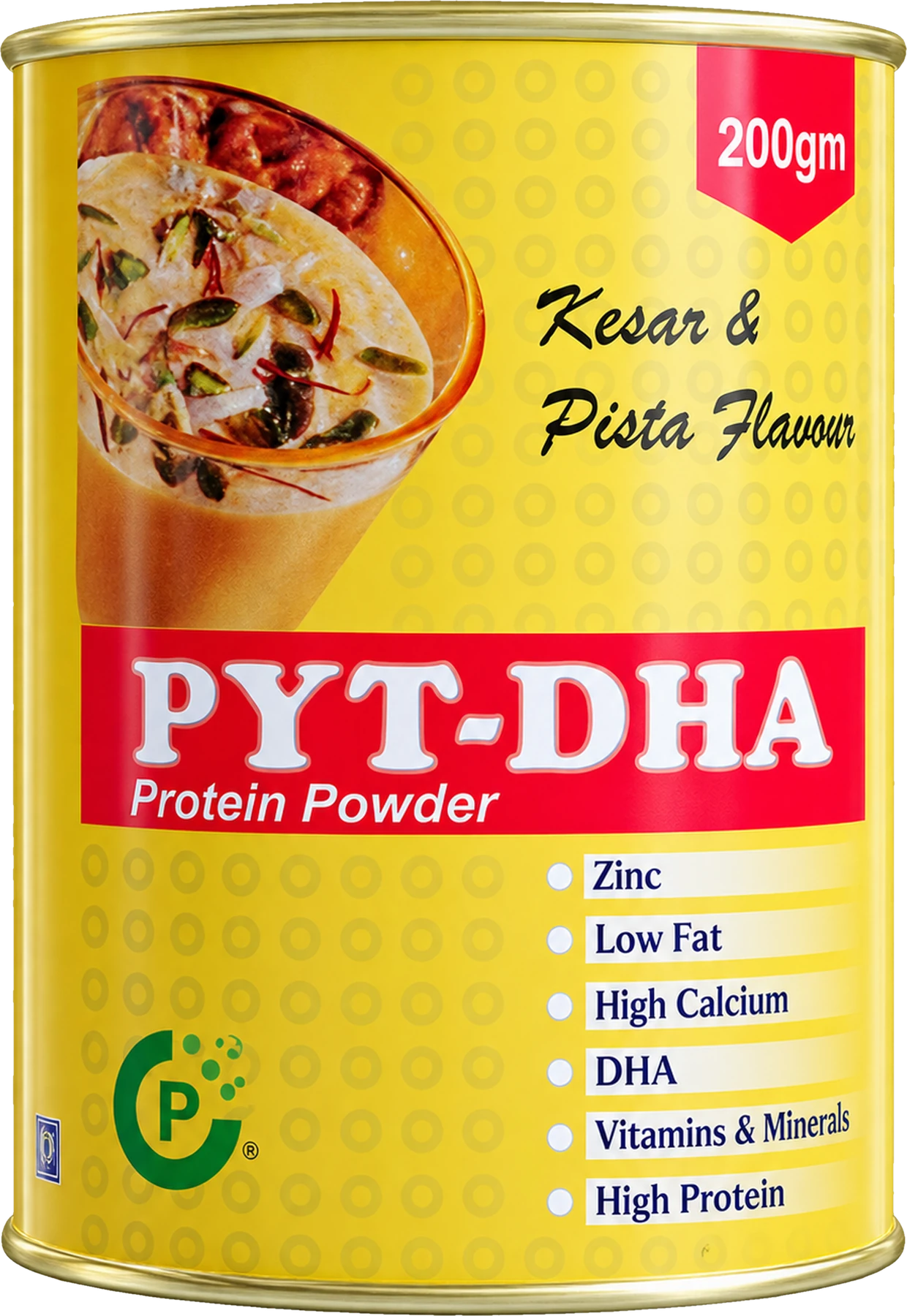
You don't need a dramatic diet change to close a protein gap. Small, consistent additions matter more than occasional large ones. A protein-fortified powder added to milk or water is one of the simplest ways to do this. Our Pyt-DHA Powder is built around exactly this idea: a Kesar and Pista flavoured protein and calcium supplement that fits into an existing routine, a glass with breakfast, or after physical activity, rather than requiring you to restructure your meals.
Protein and calcium: a natural pairing
Protein and calcium needs often overlap. Both matter for maintaining muscle and bone strength as you age, which is why combined formulations can be more practical than managing two separate supplements. This is particularly relevant for growing children, older adults, and anyone recovering from illness or surgery.
As with any dietary change, if you have kidney concerns or another condition affecting protein metabolism, check with your doctor before significantly increasing your intake. For most healthy adults, though, closing a modest protein gap is one of the simplest, most measurable changes you can make to daily nutrition.