Vitamin D3 Deficiency in Children: Why It's So Common, and What Helps
It seems counterintuitive: a tropical country with abundant sunshine, yet study after study finds Vitamin D deficiency in a majority of Indian infants and children, in some surveys, well over half. Understanding why helps explain why so many paediatricians now check, and supplement, as a matter of routine rather than exception.
Why deficiency is so widespread despite the sun
Sunlight exposure alone doesn't guarantee adequate Vitamin D. Indoor-heavy daily routines, sunscreen use, air pollution that scatters UVB rays, and higher melanin content in darker skin (which naturally reduces Vitamin D synthesis) all add up. For infants in particular, exclusive breastfeeding, while ideal for almost everything else, provides very little Vitamin D, since breast milk is naturally low in it. This is precisely why most paediatric guidelines now recommend a Vitamin D supplement for breastfed infants from the first few weeks of life.
Why it matters so much in early childhood
Vitamin D isn't just about bones, though that's where deficiency is most visible: it governs how effectively a child's body absorbs and uses calcium to build bone density, which is why severe, prolonged deficiency can lead to rickets. But Vitamin D also plays a supporting role in healthy nerve and muscle function and in normal immune development, which is part of why deficient children are often described by parents as generally less robust, not just having weaker bones.
Recognising the signs
- Delayed crawling, sitting or walking milestones
- Bowed legs or visibly soft, delayed-closing fontanelles in infants
- Frequent infections
- Irritability, poor sleep or muscle weakness
- Slow growth or poor weight gain
Correcting a deficiency, safely
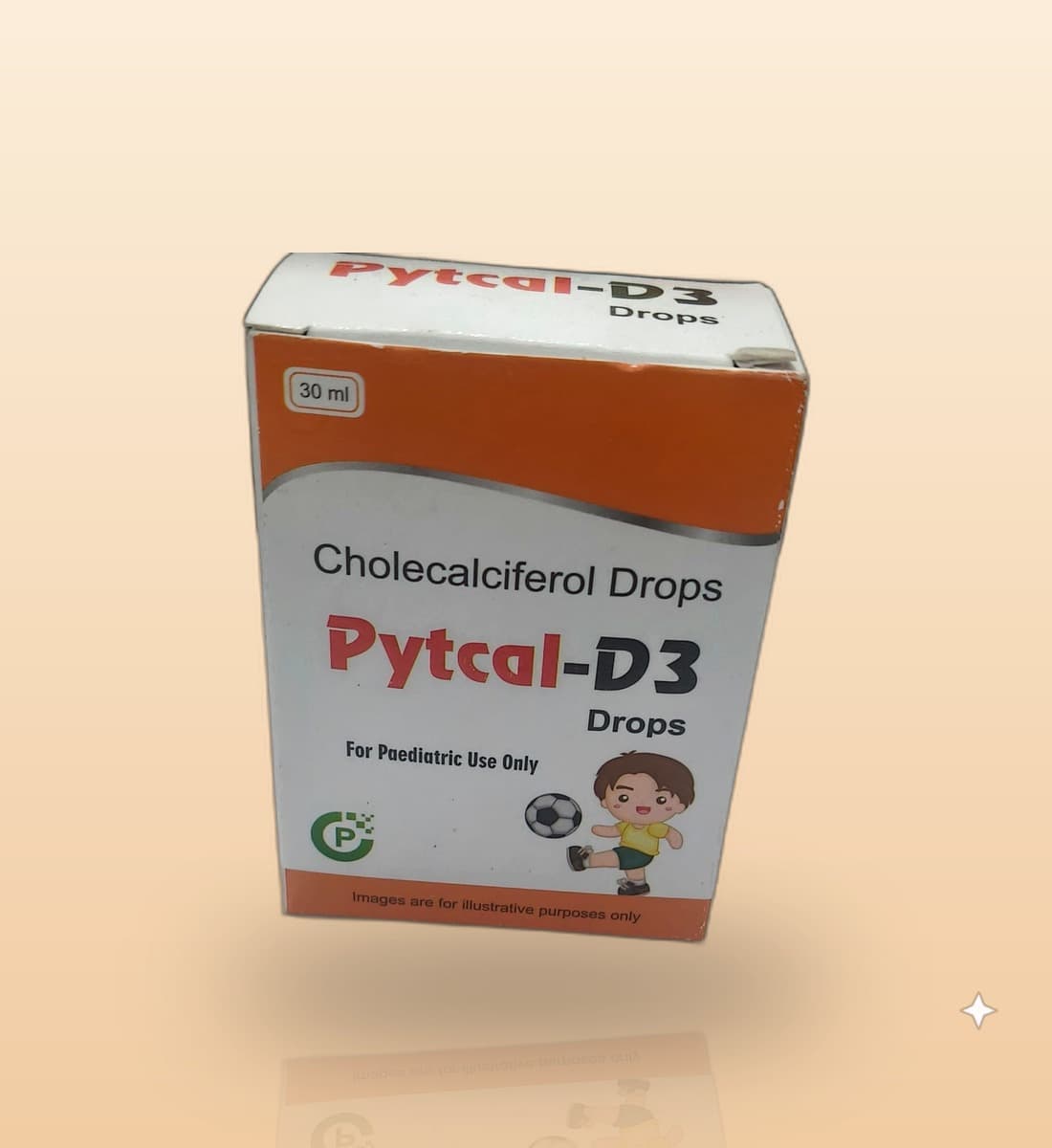
Because infant and child dosing is very different from an adult's, this is one area where guessing is genuinely risky, both under- and over-supplementation carry consequences, so a paediatrician should confirm the diagnosis and dose before starting. Our Pytcal-D3 Drops are formulated specifically for paediatric use, delivering Cholecalciferol (Vitamin D3) in an easy, dropper-dosed liquid that's simple to administer accurately to infants and young children, exactly the age group where getting the dose right matters most.
For older children and adults who need a confirmed, high-dose correction rather than daily maintenance, a physician may instead recommend a concentrated weekly dose, such as our Pytcal-D3 Nano Shot, before shifting back to routine, food- or drop-based maintenance.
The reassuring part is that Vitamin D deficiency, once identified, is one of the most straightforward paediatric conditions to correct. With the right dose, consistently given and followed up with a repeat blood test where advised, levels typically normalise well within a few months.