Understanding Iron Deficiency: Symptoms, Causes and Recovery
Fatigue is often dismissed as a normal part of a busy life, but persistent, unexplained tiredness, especially alongside pale skin, breathlessness on exertion, or difficulty concentrating, is one of the clearest signs of iron deficiency, one of the most common nutritional shortfalls globally, particularly among women, children and pregnant individuals.
Why iron matters so much
Iron is a core component of haemoglobin, the protein in red blood cells responsible for carrying oxygen from your lungs to every tissue in your body. When iron stores run low, your body produces less haemoglobin, and oxygen delivery to tissues and organs suffers, which is why fatigue, weakness and poor concentration are such common early signs.
Common causes
- Inadequate dietary intake, particularly in vegetarian and vegan diets
- Increased requirements during pregnancy and breastfeeding
- Heavy menstrual bleeding
- Chronic blood loss from gastrointestinal conditions
- Poor absorption due to underlying digestive issues
Recognising the signs
Beyond fatigue, watch for pale skin and nail beds, brittle nails, cold hands and feet, unusual cravings for non-food items (a condition called pica), and frequent headaches. In children, iron deficiency can also affect concentration and growth, which is why age-appropriate formulations matter.
Recovering iron levels safely
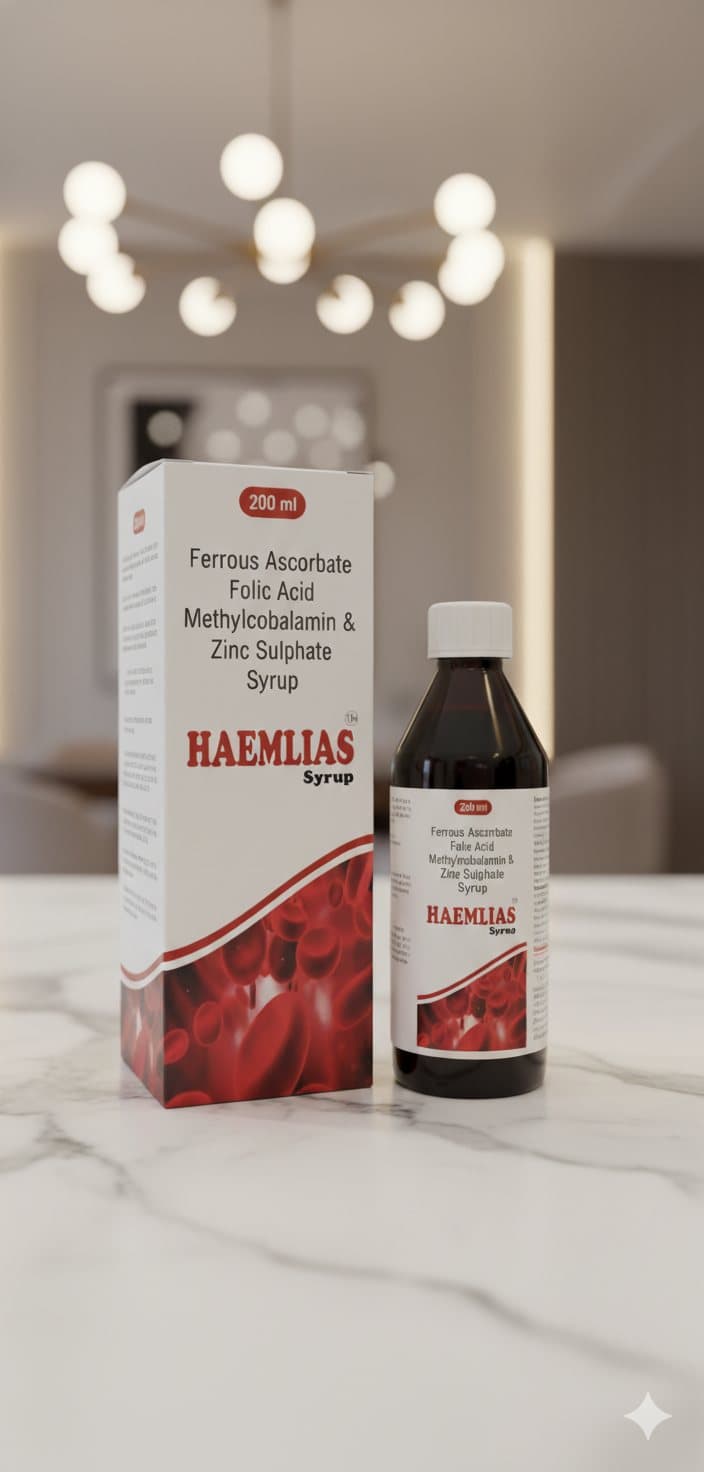
Diagnosis should always start with a simple blood test, since supplementing blindly can mask other underlying conditions. Once iron deficiency is confirmed, recovery typically combines dietary changes (iron-rich foods paired with Vitamin C to improve absorption) with a well-tolerated iron supplement. Our Haemlias range is built around this principle: Haemlias Syrup and Tablets combine Iron with Folic Acid, Vitamin B12 and Zinc for adults, formulated to minimise the gastric discomfort that often causes people to abandon iron supplementation, while Haemlias Drops offer an easy, concentrated dose designed specifically for infants and toddlers.
With consistent supplementation and dietary support, haemoglobin levels typically begin improving within a few weeks, though full iron store recovery can take a few months. As always, dosage and duration should be guided by your physician based on your specific blood work.