
Understanding Nerve Pain: Why Neuropathy Needs a Different Approach
India carries one of the largest diabetic populations in the world, and diabetic neuropathy, nerve damage caused by prolonged high blood sugar, is one of its most common and most under-recognised complications. But diabetes isn't the only cause: nerve pain also shows up after shingles, from chronic vitamin B12 deficiency, and following injuries or surgery that affect a nerve directly. Whatever the trigger, it tends to feel distinct: burning, tingling, electric-shock-like or a persistent 'pins and needles' sensation, and it rarely responds well to standard painkillers.
Why ordinary painkillers fall short
Common analgesics are built to dampen pain signals generated by tissue damage or inflammation, a sprained ankle, a sore joint, a fever. Neuropathic pain is different: the nerves themselves are damaged or firing abnormally, sending pain signals with no ongoing tissue injury to treat. That's why nerve pain calls for medicines that work at the level of the nerve and spinal cord, rather than at the site of an injury.
How nerve-targeted medicines work
Gabapentin and Pregabalin belong to a class that calms overactive electrical signalling in damaged nerves, reducing the frequency and intensity of pain signals reaching the brain. Low-dose Nortriptyline, from a different drug class entirely, is separately well established for chronic nerve pain, and combining it with Gabapentin can offer more complete relief than either approach alone, particularly for pain that hasn't responded well to a single agent. Methylcobalamin, an active form of Vitamin B12, is often paired alongside these to support the nerve's own repair processes, especially relevant since B12 deficiency itself is a common, correctable cause of neuropathy.
Matching the combination to the patient
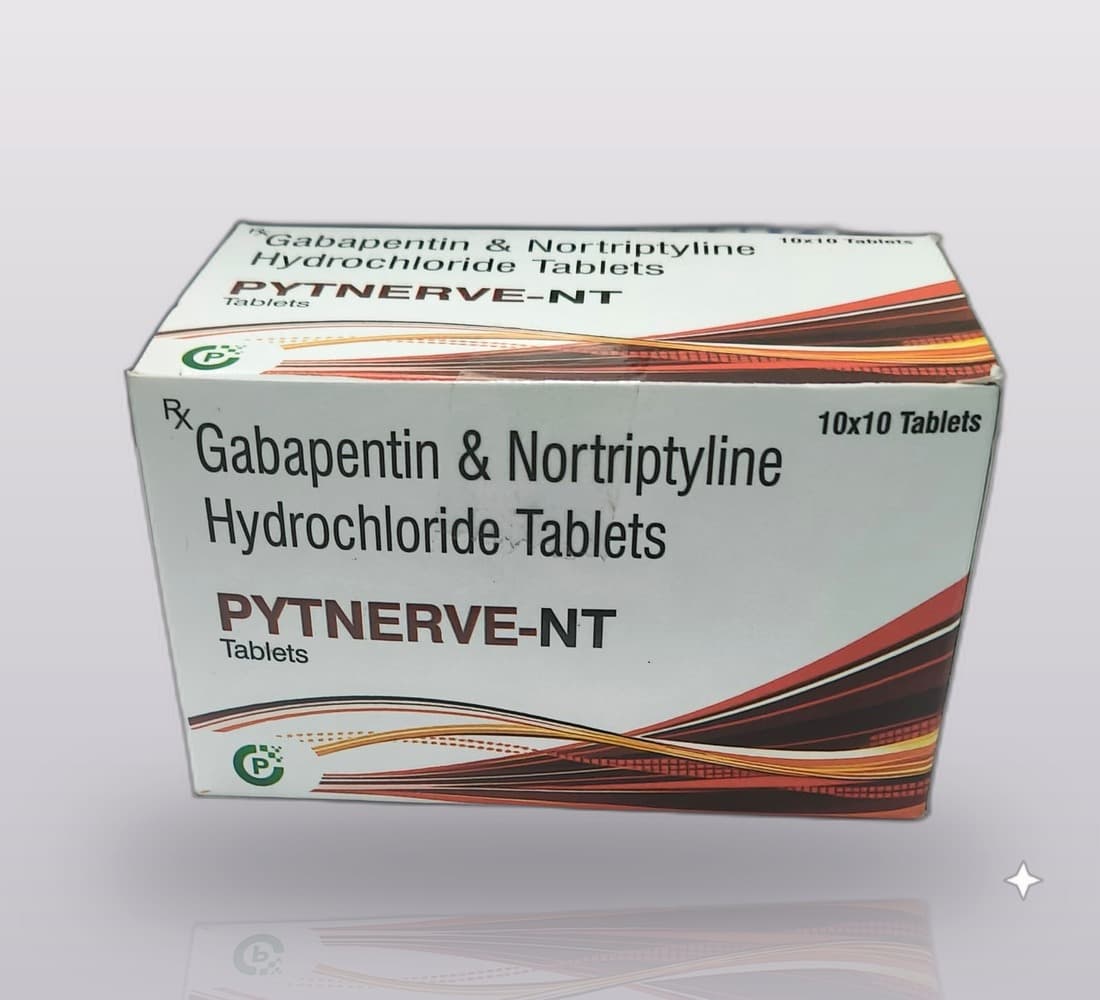
Not every nerve pain patient needs, or tolerates, the same combination, which is why having more than one option matters. Our Pytnerve Tablets pair Pregabalin with Methylcobalamin, a well-established combination for diabetic neuropathy, post-herpetic neuralgia and fibromyalgia. Our newer Pytnerve-NT Tablets take a different route, combining Gabapentin with Nortriptyline, an alternative for patients who need that additional antidepressant-class action on chronic pain pathways, or who haven't had adequate relief from a Pregabalin-based regimen alone. Both are prescription combinations, and the right choice depends on the specific type and history of the nerve pain, which is a conversation for your physician, not a pharmacy-counter decision.
What to expect during treatment
Nerve pain medicines typically take one to a few weeks to show their full effect, and doses are often adjusted gradually. Mild drowsiness or dizziness in the first days is common and usually settles. Because these medicines affect the nervous system, they should never be started, stopped or adjusted without medical guidance, and any new or worsening numbness, weakness or mood changes should be reported to your doctor promptly.
Nerve pain can be genuinely disruptive to sleep, mood and daily function, but it's also one of the more treatable chronic pain conditions once it's correctly identified and matched to the right combination. If persistent burning, tingling or numbness is affecting your day-to-day life, it's worth a proper neurological work-up rather than living with it.